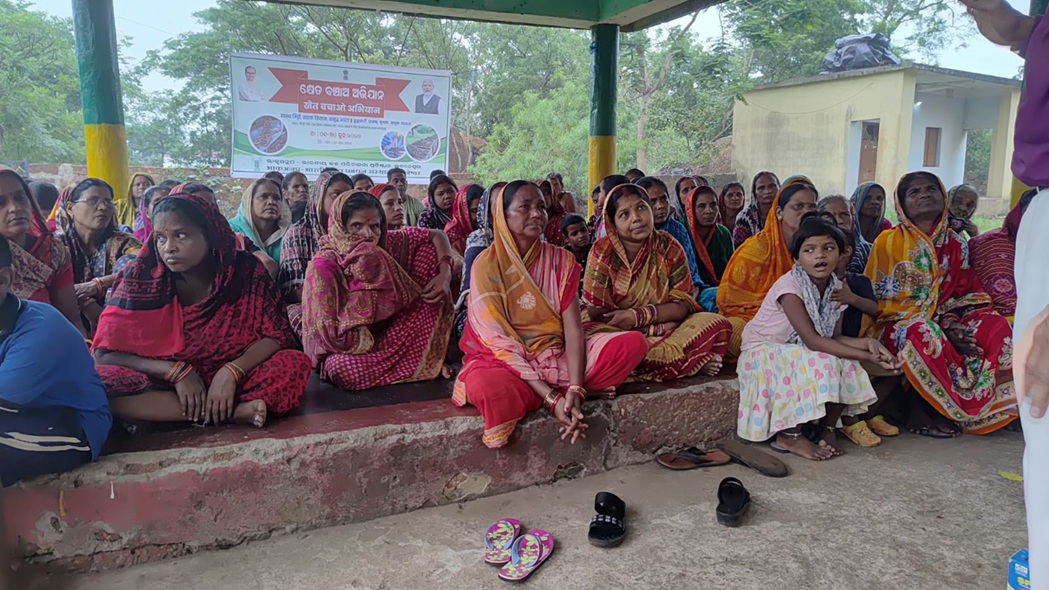
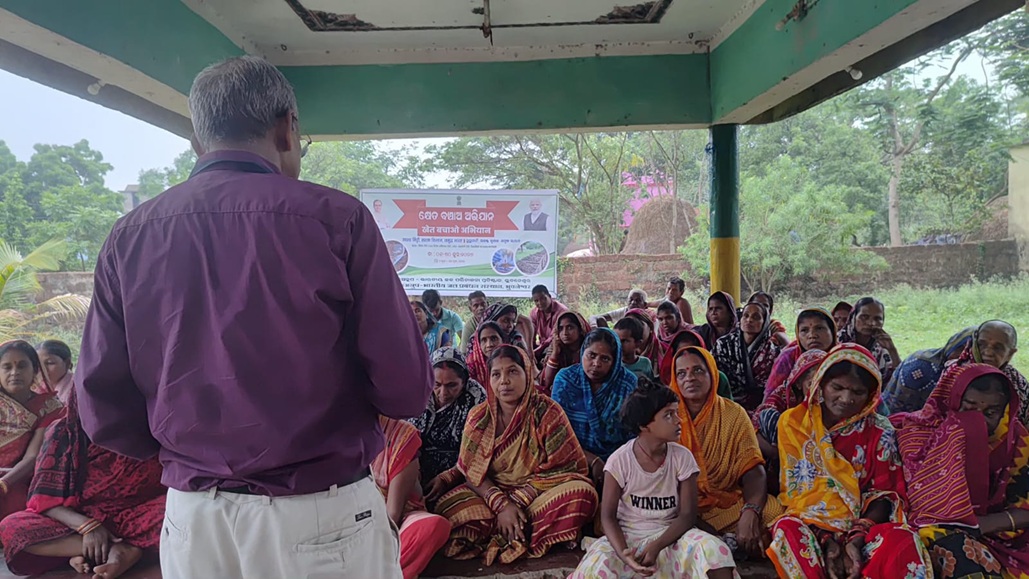
The ICAR-Indian Institute of Water Management (ICAR-IIWM), Chandrasekharpur, Bhubaneswar, organized an awareness-cum-training programme on "Khet Bachao Abhiyan" on the afternoon of 19th June 2026 at Anda Village, Kanas Block, Puri District, Odisha. A total of 23 farmers including 18 women farmers participated in the programme. Dr. B. S. Satapathy and Dr. Ranabir Chakraborty served as the resource persons. Sri Radha Syam Biswal, progressive farmer also attended the meeting. Dr. B.S. Satapathy introduced the objectives of the Khet Bachao Abhiyan and emphasized the importance of protecting soil as a living resource essential for food, nutritional, and environmental security. He highlighted the need for adopting balanced fertilization practices, improving soil organic matter, and reducing excessive dependence on chemical fertilizers to ensure long-term agricultural sustainability. The benefits of vermicompost, green manuring, and nano-fertilizers in improving nutrient-use efficiency and sustaining crop productivity were also discussed. He also discussed the role of crop residue incorporation, conservation agriculture practices, and moisture conservation measures in maintaining soil health and enhancing resilience to climatic stresses. Dr. R. Chakraborty sensitized the farmers on the consequences of continuous nutrient mining, declining soil fertility, and imbalanced fertilizer application. He discussed the principles of integrated nutrient management and encouraged farmers to combine organic and inorganic nutrient sources for maintaining soil productivity. He also stressed the importance of recycling locally available farm resources for improving soil health and reducing cultivation costs. He also delivered a session on eco-friendly soil health management practices and explained the role of biofertilizers such as Rhizobium, Azotobacter, Trichoderma, Phosphate Solubilizing Bacteria (PSB), and Potassium Solubilizing Bacteria (KSB) in enhancing nutrient availability and soil biological activity. Farmers actively participated in the discussions and shared their field experiences and challenges related to soil fertility management. The scientists addressed their queries and provided practical recommendations for improving soil health, enhancing nutrient-use efficiency, and sustaining crop productivity. The programme concluded with a vote of thanks and a collective commitment by the participants to adopt soil-friendly and sustainable agricultural practices.