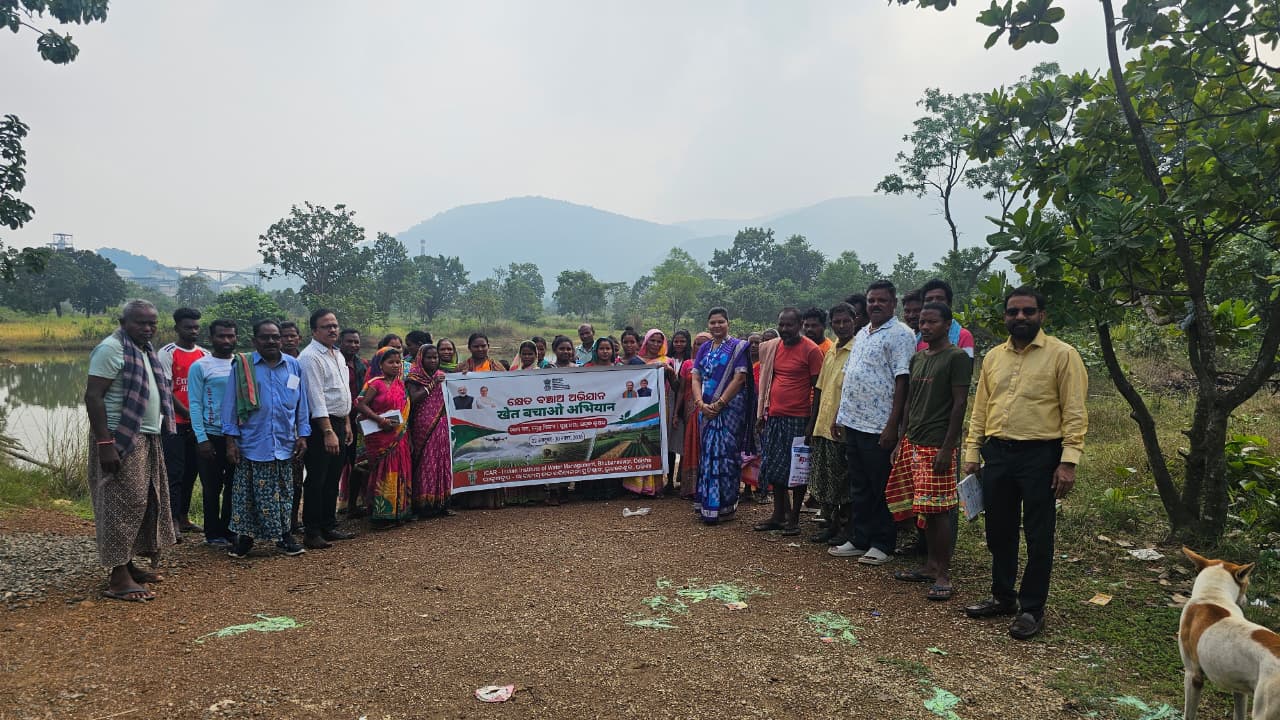
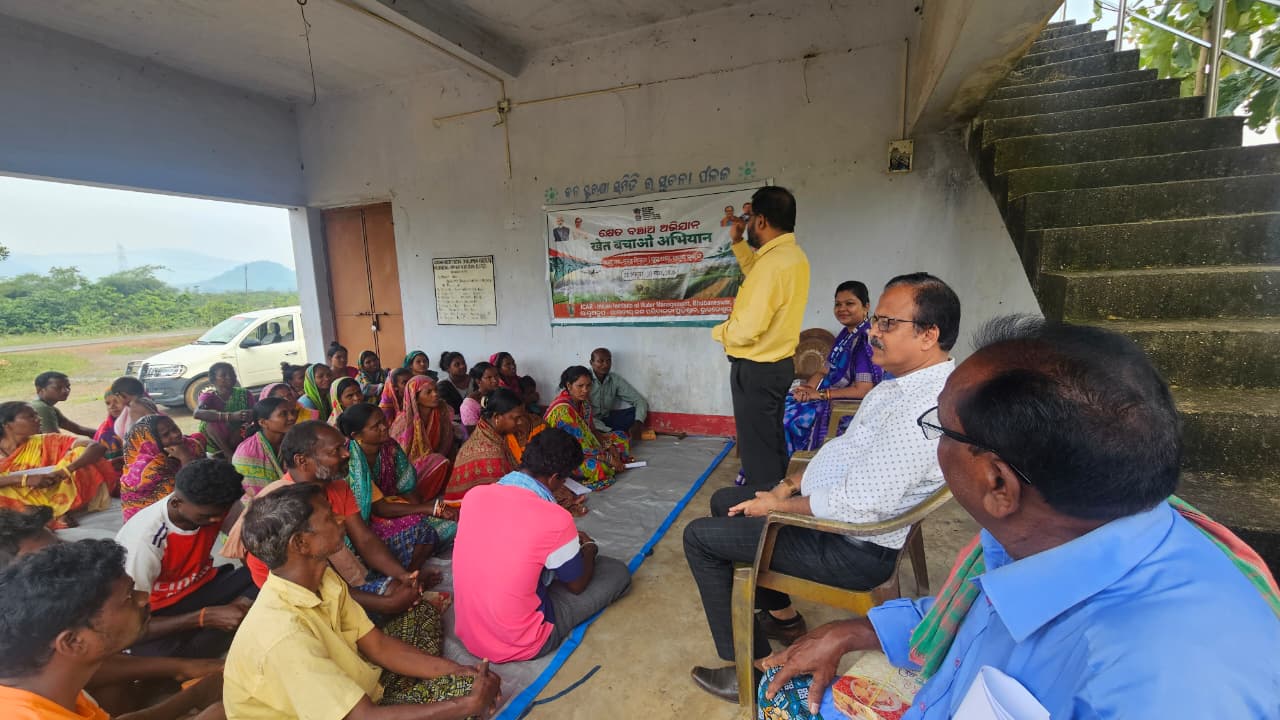
An awareness programme under the Khet Bachao Abhiyan was organized on 05 November 2026 at Majhisahi village under Dhenkanal Sadar Block of Dhenkanal district, Odisha. A total of 48 farmers (31 women and 17 men) participated in the programme. The programme was conducted by scientists from ICAR–Indian Institute of Water Management (IIWM), Bhubaneswar, including Dr. R. K. Mohanty, Dr. H. K. Dash and Dr. Prativa Sahu. During the programme, Dr. R. K. Mohanty highlighted the importance of integrated nutrient management (INM) through the judicious combination of chemical fertilizers, organic manures and biofertilizers. He emphasized recycling of farm-generated organic resources and efficient nutrient management to reduce cultivation costs and minimize environmental impacts. He also delivered a talk on scientific fisheries management, covering pond water quality, balanced pond fertilization, optimum stocking density and scientific fish feeding practices. Dr. H. K. Dash emphasized the importance of balanced fertilization for maintaining soil fertility and enhancing crop productivity. He sensitized farmers about soil-test-based fertilizer application and the judicious use of chemical fertilizers according to crop nutrient requirements. He also highlighted the benefits of alternative fertilizer sources such as single super phosphate (SSP), NPK complexes and ammonium sulphate, emphasizing their appropriate use for improving nutrient-use efficiency, minimizing nutrient losses and reducing fertilizer expenditure. Dr. Prativa Sahu highlighted the role of biofertilizers and organic nutrient sources in improving soil health and sustaining agricultural productivity. She explained the importance of beneficial microbial inoculants such as Rhizobium, Azotobacter, phosphate-solubilizing bacteria (PSB) and potassium-solubilizing bacteria (KSB) in improving nutrient availability to crops. She also sensitized farmers about green manuring using Dhaincha (Sesbania), crop residue recycling, composting and the application of farmyard manure (FYM) and vermicompost. Further, she emphasized crop diversification and pulse-based crop rotations for improving soil organic matter and promoting sustainable farming systems. The programme concluded with an interactive discussion during which farmers shared their experiences and raised queries related to fertilizer application, biofertilizer use, crop production and fisheries management. The scientists addressed their queries and provided suitable recommendations for adopting sustainable agricultural practices, improving farm resource-use efficiency and enhancing farmers' income.