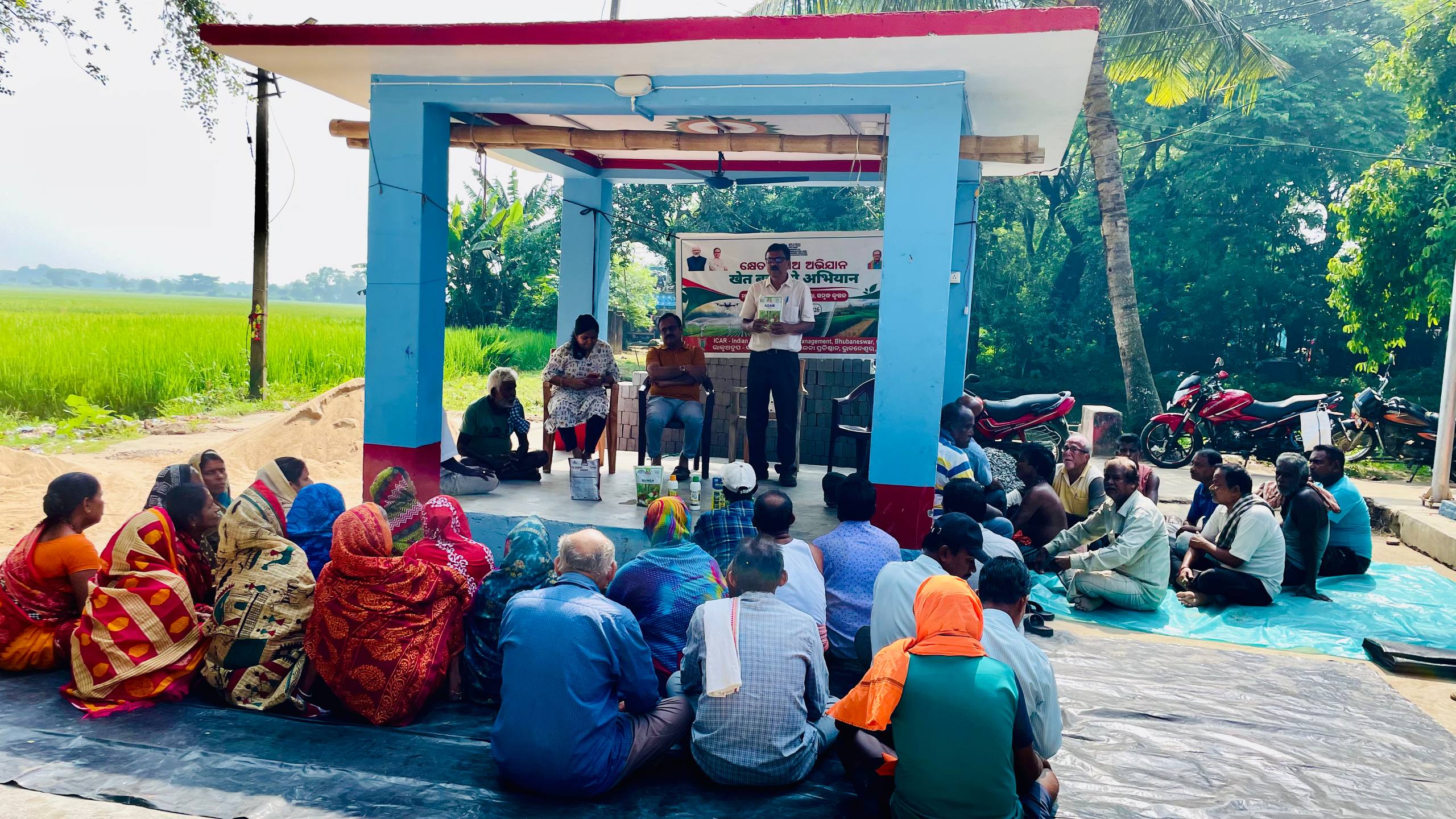
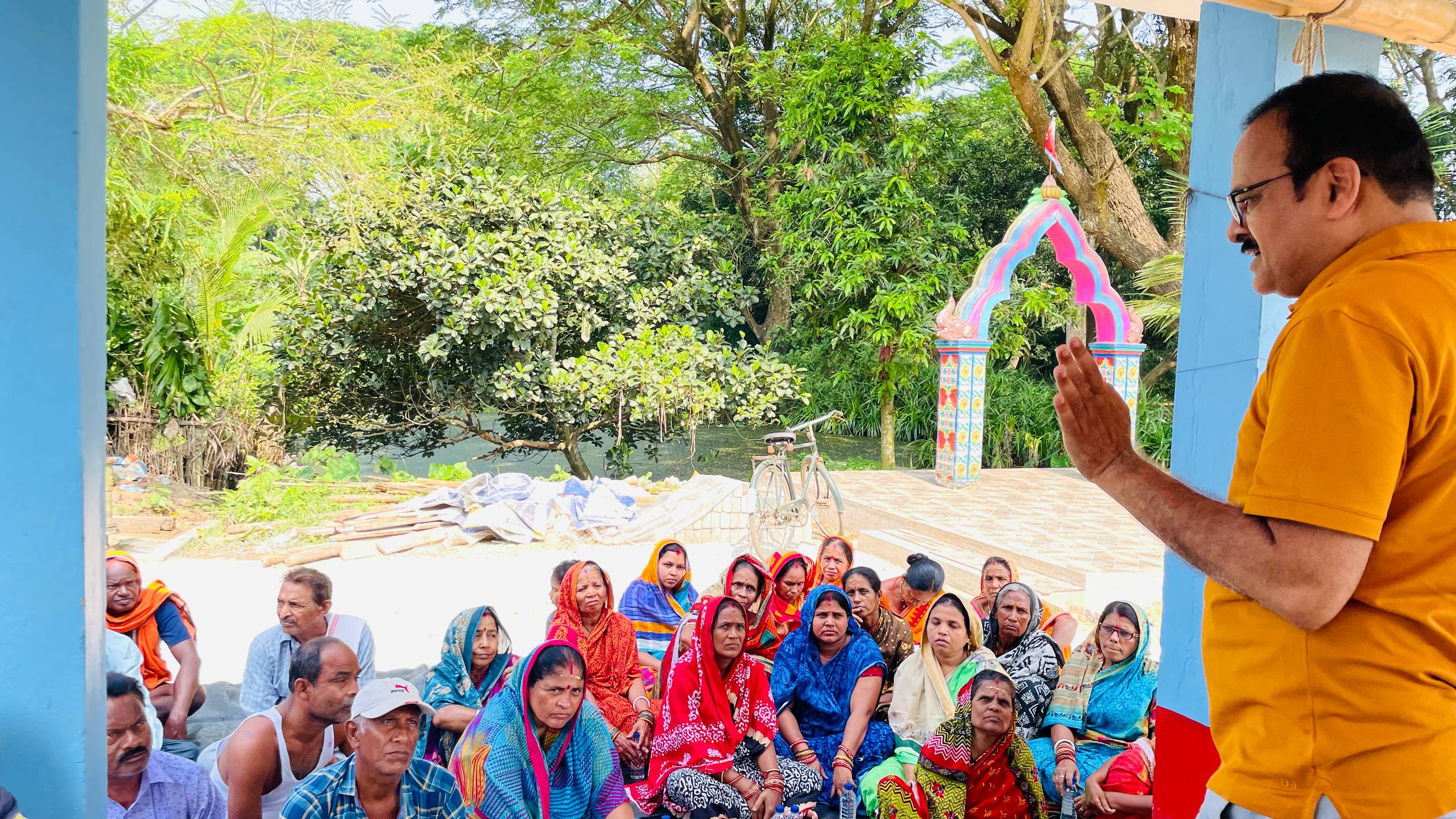
An awareness programme was organised on 10 November 2026 under the ongoing ‘Khet Bachao Abhiyan – Rabi 2026’ at Badabili village, Kantapada Block, Khordha district, Odisha. The programme was conducted by scientists of ICAR–Indian Institute of Water Management (ICAR-IIWM), Bhubaneswar, with the participation of 62 farmers, comprising 40 men and 22 women.The programme was conducted by Dr. R. K. Mohanty, Dr. S. Mohanty, Dr. Ankhila and Dr. Md. Shafeeq, who interacted with farmers and addressed their queries on different aspects of crop production, soil management and fisheries. The programme covered various aspects of soil health conservation, sustainable agriculture and improved nutrient management practices. Farmers were informed about the benefits of organic farming, natural farming and the use of farm-derived organic inputs such as compost, farmyard manure and vermicompost. Special emphasis was given to the role of vermicompost in improving soil structure, organic carbon content, microbial activity and nutrient availability. The scientists also explained the importance of biofertilisers, particularly Azospirillum, in biological nitrogen fixation, root development and improving nutrient uptake. Discussions were held on the application and benefits of Nano Urea and Nano DAP, including their appropriate methods and stages of application for improving nutrient-use efficiency. The importance of integrated nutrient management (INM), combining organic manures, biofertilisers and chemical fertilisers, was highlighted. Farmers were also encouraged to utilise Soil Health Cards and soil-test-based recommendations for balanced fertiliser application and to avoid excessive use of chemical inputs. Crop residue recycling, green manuring and efficient utilisation of farm waste were also discussed. A special discussion was held on scientific fisheries management. Dr. R. K. Mohanty explained improved aquaculture practices, including pond preparation, selection of suitable fish species, stocking density, quality fish seed, supplementary feeding and maintenance of water quality. He also discussed the importance of monitoring dissolved oxygen, pH and other water quality parameters, along with preventive measures for managing fish diseases. The potential of integrated fish farming and better utilisation of available water resources for diversifying farm income was also highlighted. Other discussions covered efficient irrigation practices, water conservation and improved crop management techniques to minimise production risks and enhance farm-level resource-use efficiency.The programme provided a platform for sharing scientific knowledge on both crop and allied agricultural activities, encouraging farmers to explore diversified and resource-efficient farming systems.